How to structure technical progression in your club
In a martial arts club, students’ technical progression is at the heart of everything: motivation, retention, performance… and even the club’s image. Yet many organizations still operate informally, with implicit progression that can be hard to track.
So how do you structure your students’ technical progression effectively while staying true to martial values? And above all, how can you rely on modern tools to simplify this?
Why structuring progression is essential
A student who understands where they’re going… stays.
Modern teaching confirms it: according to work on self-determination theory (Deci & Ryan), a person progresses better when they clearly perceive:
their goals
their current level
the steps to take
In martial arts, this naturally translates into:
belts (ranks, levels, certifications)
technical curricula
learning cycles
Without a clear structure, a student can quickly feel:
stagnation
a lack of recognition
a loss of motivation
The foundations of effective technical progression
1. Define a clear curriculum for each level
Each belt should correspond to a set of skills:
technical (e.g. throws, combinations)
physical (e.g. balance, coordination)
theoretical (e.g. principles, vocabulary)
Ideally, break progression into blocks:
beginner
intermediate
advanced
👉 This makes learning readable and progressive.
2. Use spaced repetition
Learning science highlights a key concept: spaced repetition.
Rather than teaching a technique only once:
you revisit it several times
at regular intervals
in different contexts
The result:
better retention
automation of movements
more lasting progression
3. Introduce learning cycles
Organizing your classes in cycles (4 to 8 weeks) helps structure progression:
Cycle 1: technical fundamentals
Cycle 2: variations and combinations
Cycle 3: application in real situations
This is an approach used in the constructivist teaching model: the student gradually builds their skills from what they’ve already learned.
4. Track each student individually
Not all students progress at the same pace.
A good progression system should let you:
identify strengths and weaknesses
track attendance
visualize progression
This is often where clubs run into difficulties… especially with paper or Excel tools.
The most common mistakes
Even with good intentions, certain mistakes hold progression back:
❌ A curriculum that exists only in the instructor’s head
❌ No individual student tracking
❌ Belt gradings based solely on gut feeling
❌ Too many techniques, not enough consolidation
The result: blurry progression… and students who drop out.
How digital tools support progression
Today, digitizing technical progression is no longer a luxury—it’s a powerful lever.
A good tool lets you:
centralize technical curricula
track belts and validations
visualize each student’s progression
structure learning cycles
This is exactly the philosophy behind Kimono, a CRM designed specifically for martial arts clubs.
👉 Unlike general-purpose tools, Kimono was built to meet instructors’ real-world needs: simplicity, clarity and time savings.
How Kimono simplifies technical progression
With Kimono, you can:
✔️ Structure your belts
create custom belts
multi-discipline support
adapt to your school
✔️ Attach a curriculum to each level
techniques to master
progressive validation
clear teaching follow-up
✔️ Track each student individually
visible progression
validation history
better preparation for belt gradings
✔️ Save time every day
no more lost sheets
no more rough tracking
an instant global overview
Kimono follows a simple logic:
put teaching back at the center, and automate the rest.
Structuring your progression means structuring your club
A club that is well organized pedagogically:
retains its students better
values its instructors
improves its sporting results
strengthens its image
And above all, it creates a clear, motivating experience for every practitioner.
Conclusion
Organizing your club’s technical progression isn’t just a matter of curriculum…
It’s a genuine teaching strategy.
By relying on:
the principles of learning science
a clear structuring of levels
and suitable tools like Kimono
you can transform your students’ progression… and take your club to the next level.
Related articles
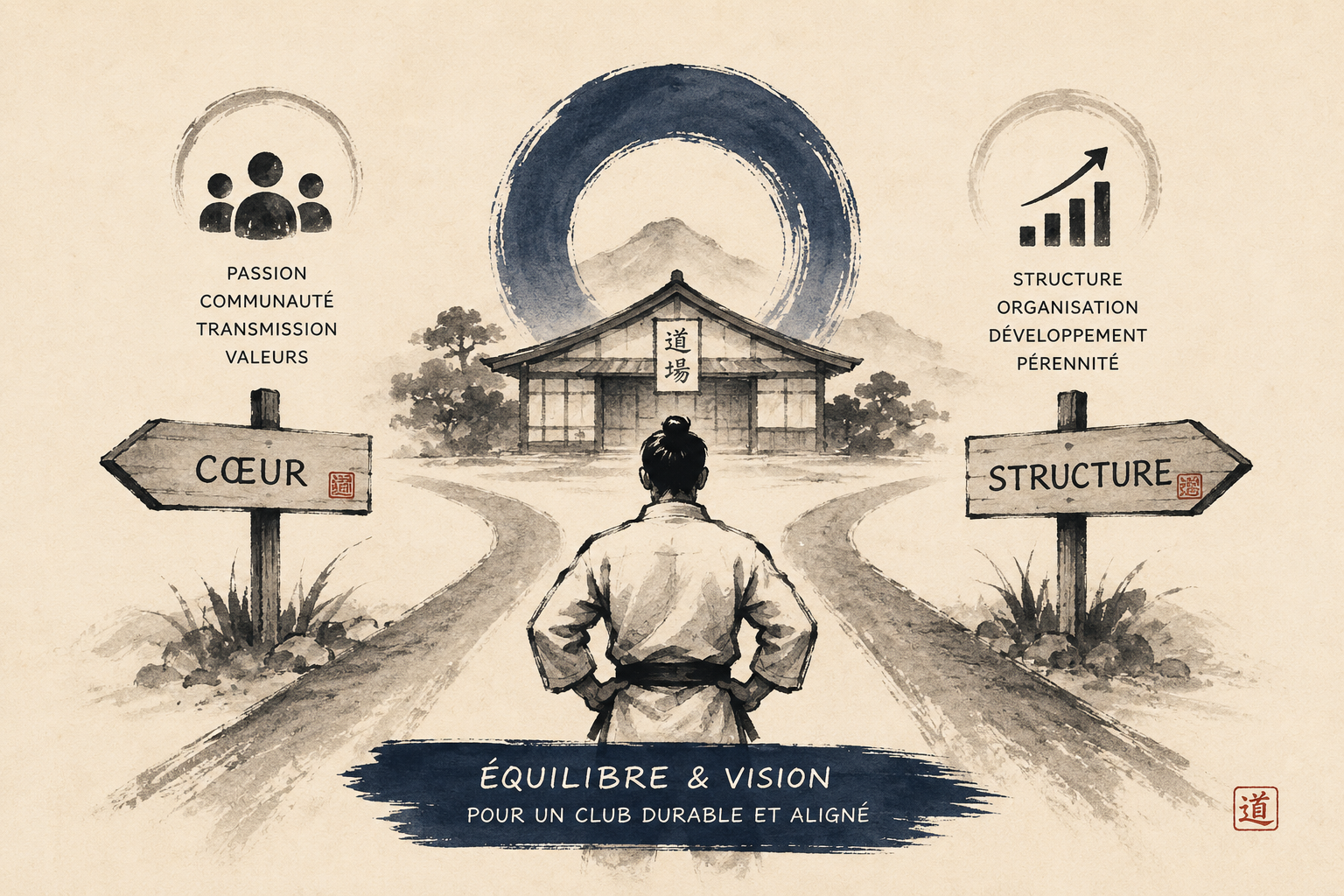
Professionalizing your club without losing its soul
For a long time, many martial arts clubs ran almost entirely on passion. A municipal hall, a few slots lent by the town, dedicated volunteers, and above all a desire to pass on knowledge. But over time, expectations evolve.
Read article →
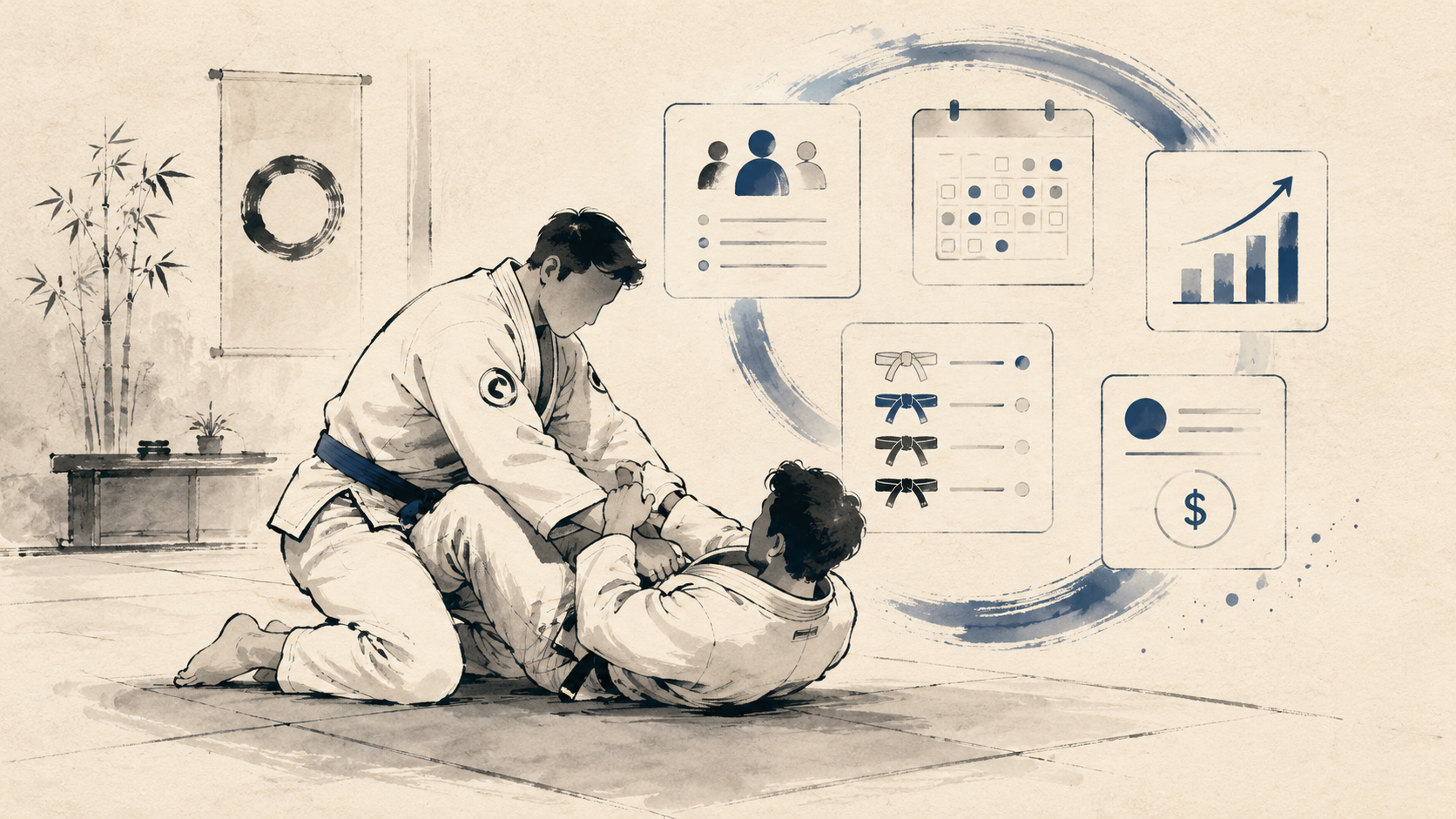
The professionalization of BJJ: why clubs must also structure their management
Brazilian Jiu-Jitsu long kept the image of a discipline for enthusiasts: mats, a tight-knit team, a committed instructor, a strong culture and progression built over several years.
Read article →
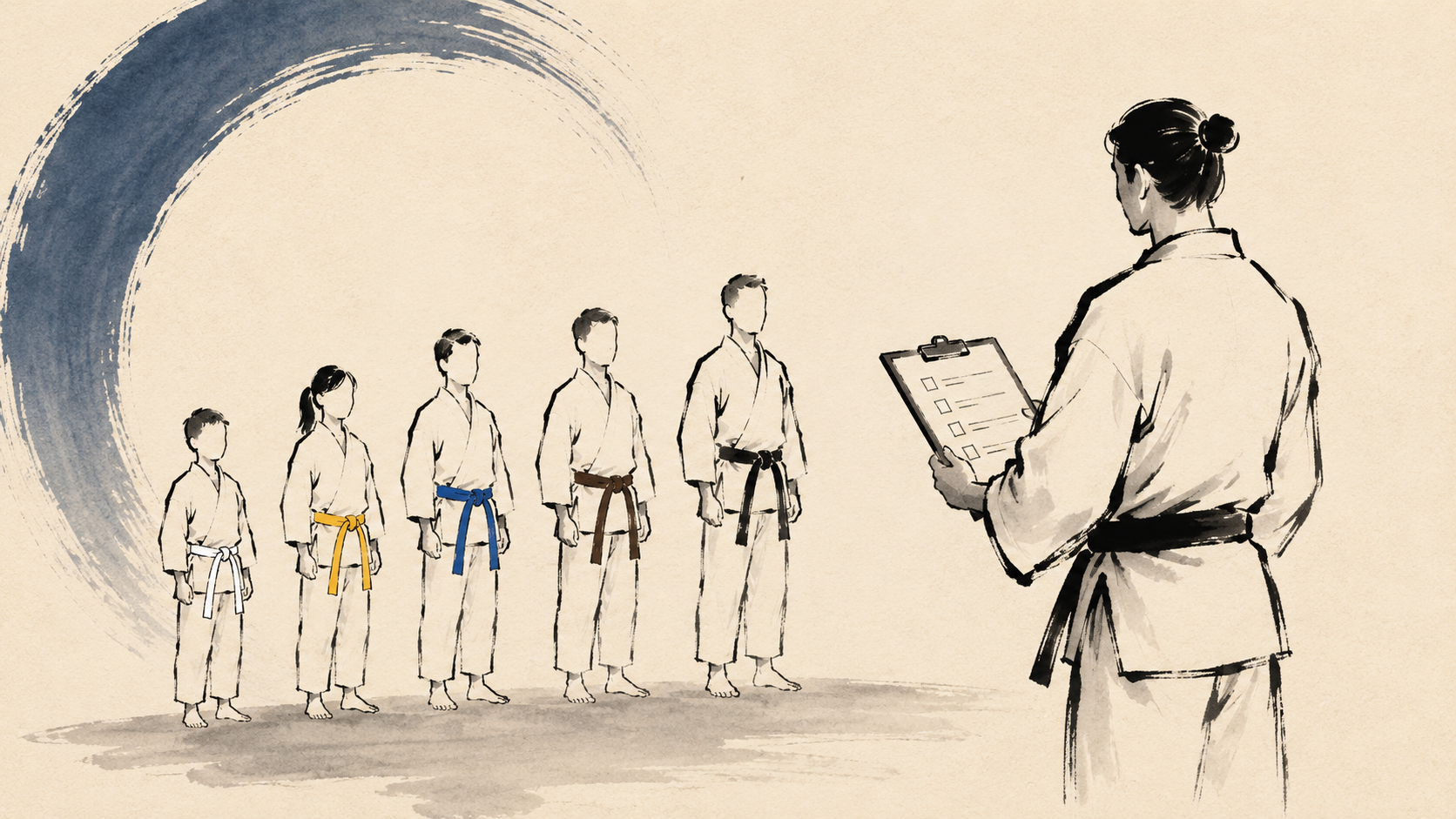
How to organize belt gradings effectively in a martial arts club
Belt gradings are among the most important moments in the life of a martial arts or combat sports club. Whether you practice judo, karate, taekwondo, aikido, Brazilian jiu-jitsu, kung fu, krav maga, kickboxing or any other discipline, a rank represents far more than a simple belt, level or color.
Read article →